Quick answer
ERA recorded 25 landed-shophouse transactions in the first half of 2026, with a total value of S$269 million, using URA data as at 11 August 2026. This was below the 45 transactions in 2H 2025 and 34 in 1H 2025.
A few high-value sales materially affected average price-per-square-foot figures. Buyers and owners should therefore examine tenure, location, approved use, conservation requirements, condition, tenancy and the area basis behind each comparable rather than apply one headline average mechanically.
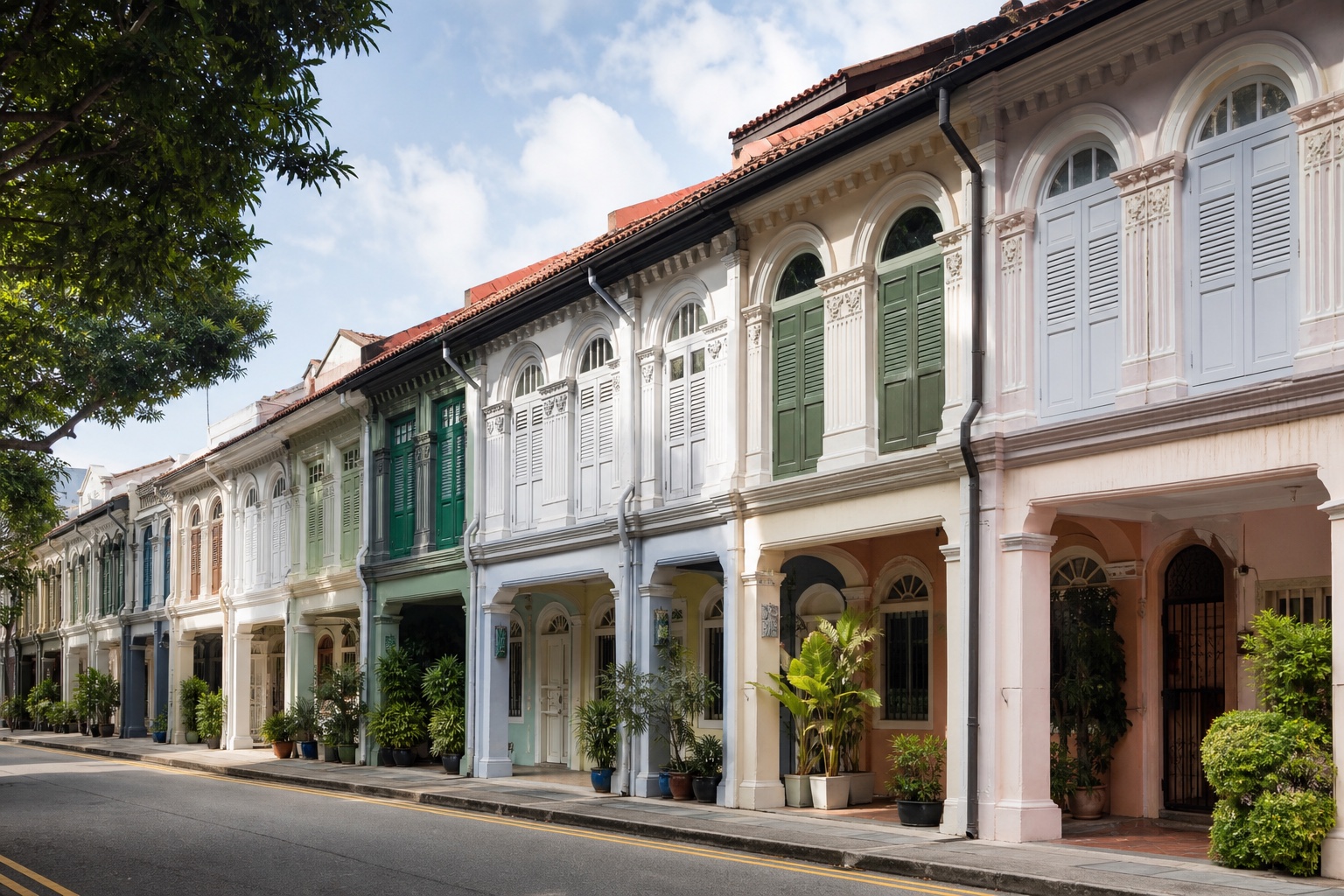
1H 2026 market snapshot
| Measure | 1H 2026 | Comparison or context |
|---|---|---|
| Transactions | 25 | 34 in 1H 2025; 45 in 2H 2025 |
| Transaction value | S$269 million | S$361 million in 2H 2025 |
| Freehold or 999-year transactions | 21 | 84% of transactions |
| Central Region transactions | 21 | 84% of transactions |
| District 8 transactions | 9 | Highest recorded district count |
| District 15 transactions | 4 | Second-highest recorded district count |
Volume was lower in 1H 2026. This does not mean every shophouse moved in the same direction: the market is small and individual transactions vary substantially.
Source: ERA Singapore, using URA data as at 11 August 2026.
Key takeaways
- ERA recorded 25 landed-shophouse transactions in 1H 2026, compared with 45 in 2H 2025 and 34 in 1H 2025.
- Total transaction value was S$269 million, down from S$361 million in 2H 2025.
- Twenty-one transactions involved freehold or 999-year leasehold properties.
- Twenty-one transactions were in the Central Region; District 8 recorded nine and District 15 recorded four.
- A few unusually high-value deals materially affected average PSF figures.
- Conserved shophouses can carry property-specific use, alteration, restoration and maintenance requirements.
- Buyers should review title, tenure, approved use, condition, tenancy, transaction costs and financing before committing.
Background
Shophouses form a small and varied segment of Singapore’s property market. Some are conserved buildings in historic districts or secondary settlements. Some are used wholly for commercial purposes, while others may contain different approved uses across their floors. Tenure, lot configuration, access, condition and tenancy can also vary substantially.
This makes simple comparisons difficult. A PSF figure may use land area, strata area or another stated basis. A sale may involve one unit or several adjoining properties. A vacant owner-occupier property is not directly comparable with a tenanted investment asset without reviewing the lease, passing rent, operating obligations and potential downtime.
Latest market update
ERA published its 1H 2026 Landed Shophouse Report on 25 August 2026, using URA data as at 11 August 2026.
ERA recorded 25 transactions during the first six months of 2026. This was below the 45 transactions recorded in 2H 2025 and the 34 recorded in 1H 2025. Total value fell from S$361 million in 2H 2025 to S$269 million in 1H 2026.
Tenure remained an important feature. ERA reported that 21 transactions, or 84%, involved freehold or 999-year leasehold properties. The other four involved 99-year leasehold properties.
ERA calculated a higher average for freehold landed shophouses in 1H 2026, but said the result was driven mainly by two Keong Saik Road transactions. Its comparison for leasehold properties was also affected by an unusually high-value transaction in the previous half-year.
Location was concentrated. ERA recorded 21 of the 25 sales in the Central Region. District 8 had nine transactions and District 15 had four. More than half of all transactions were in the S$5 million to S$10 million range.
These figures describe the recorded market. They do not establish the current value of a particular shophouse or guarantee that activity will rise or fall in the next period.
Who is affected
This update is relevant to shophouse owners considering a sale or refinancing, business owners comparing premises, investors assessing a tenanted shophouse, buyers comparing different tenures and buyers considering a conserved property that may need restoration or alteration works.
Who is not affected
This market report does not determine the value of an individual shophouse, whether a proposed business use or alteration will be approved, whether a buyer will obtain financing, or the legal, GST and stamp-duty treatment of a specific transaction.
Residential buyers comparing HDB flats or condominium units should use evidence from those market segments instead.
What remains unchanged
A current market report does not replace property-specific due diligence.
URA’s conservation guidance states that proposed works to conserved buildings must comply with the applicable conservation and Specific Restoration Guidelines. Conservation Permission is required before additions and alteration works or operations involving a new use begin.
SLA’s foreign-ownership guidance distinguishes a shophouse for commercial use from one for non-commercial use. That distinction should not be inferred from a listing description alone. A buyer should obtain legal advice on the actual title, approved use and intended occupation.
The usual commercial-purchase checks remain relevant: seller and title verification, tenure, approved use, contract terms, GST, applicable duties, financing, access constraints, physical condition and total holding cost.
Planning considerations
1. Identify what the PSF figure measures
Ask whether the figure is calculated on land area, strata area, gross floor area or another basis. Confirm whether the transaction covered one property, adjoining units or a mixed-use interest. Comparables should use a consistent basis.
2. Separate tenure from location
A freehold or 999-year property may attract different interest from a shorter-lease property, but tenure is not the only variable. Street position, access, visibility, floor configuration and surrounding uses can affect how buyers assess a property.
3. Verify approved and allowable use
Do not assume that the existing tenant, signage or marketing description proves the use is approved. Check the approved use and whether the intended activity is allowable. Where a change is contemplated, establish the permission and technical-clearance process before committing.
4. Review conservation and condition together
Conservation requirements can affect the materials, methods and approvals used for repairs and alterations. Engage the appropriate lawyer and qualified building professionals to assess the title, structure, services, party walls, roof, water ingress, fire-safety needs and proposed works.
5. Examine the tenancy
For a tenanted property, review the lease term, options, deposits, permitted use, maintenance responsibilities, arrears, reinstatement provisions and break or assignment clauses. A passing rent is not the same as secure future income.
6. Build a complete budget
Include legal and professional fees, applicable duties, possible GST, financing costs, insurance, property tax, repairs, conservation work, vacancy and tenant-incentive assumptions. Obtain tax and legal advice for the actual buyer and transaction.
7. Use several relevant comparables
A small market can produce volatile averages. Compare recent transactions that are genuinely similar in tenure, location, use, condition, area basis and tenancy. Record where each comparable differs instead of hiding the differences inside one average.
FAQ
Sources
- ERA Singapore — 1H 2026 Landed Shophouse Report — 25 August 2026
- URA — Use of Buildings in Conservation Areas — updated 19 August 2026
- URA — Conservation Guidelines — updated 18 August 2026
- URA — Updated Do-It-Right Guides for Conserved Buildings — 2 June 2026
- SLA — Foreign Ownership of Property — updated 20 August 2025
This article is for general educational discussion. Buyers and owners should verify current transaction evidence, title, approved use, conservation requirements, legal and tax implications, financing and property condition before making a commitment.