Landlords reviewing rent positioning can also check renting out your property in Singapore, tenant screening preparation and furnishing decisions for landlords before renewing or marketing the unit.
Quick answer
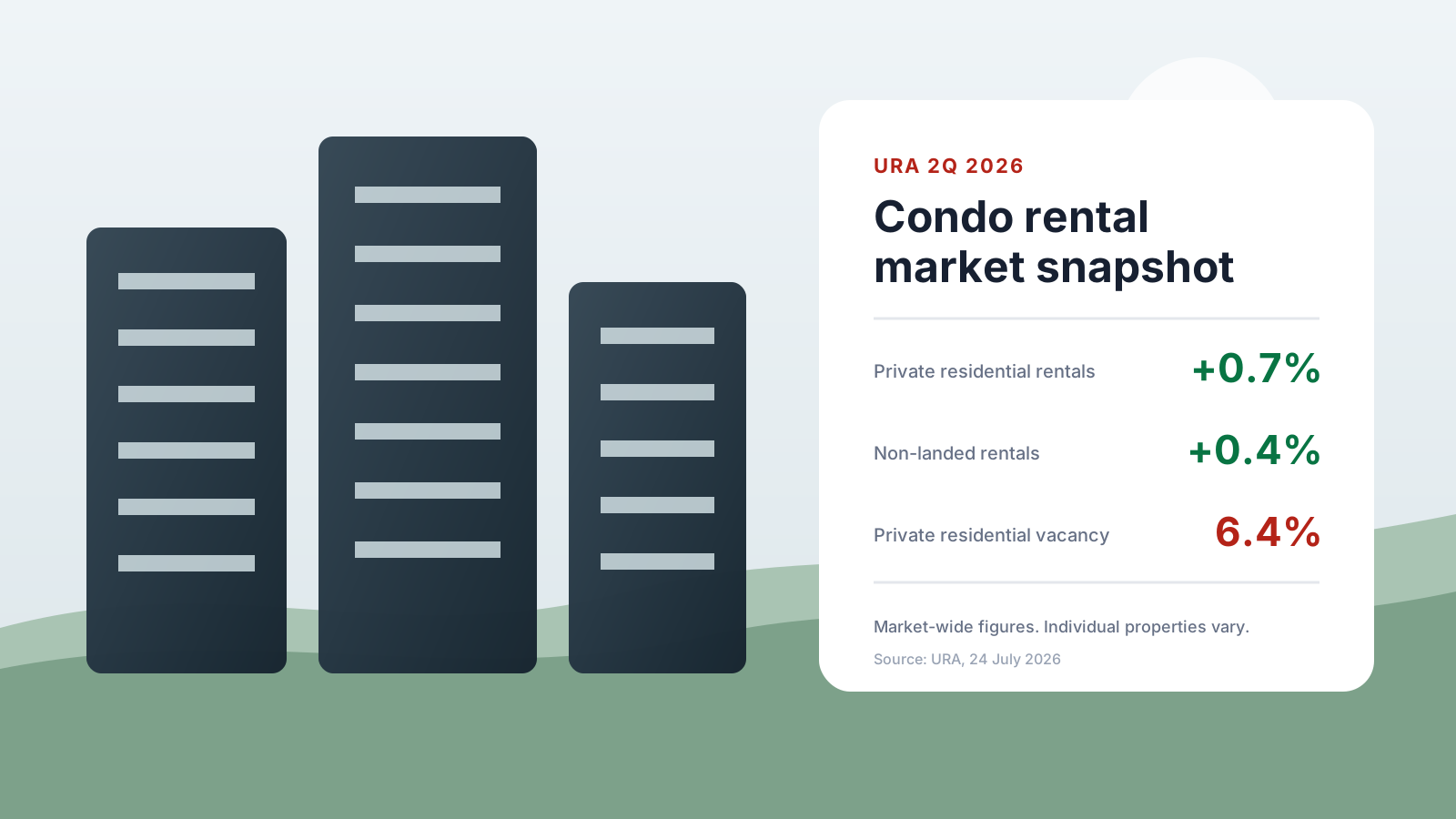
URA’s final 2Q 2026 figures show that private residential rentals increased by 0.7% from the previous quarter. Non-landed rentals rose 0.4%, but movement differed across the CCR, RCR and OCR. The vacancy rate for completed private residential units excluding executive condominiums rose to 6.4%.
For landlords, these figures support a property-specific approach. Asking rent, unit condition, furnishing, competing supply, lease timing and tenant fit still need to be reviewed together. A national or regional index does not determine the achievable rent for an individual unit.
Key takeaways
- Overall private residential rentals rose 0.7% quarter on quarter in 2Q 2026.
- Non-landed private residential rentals rose 0.4%.
- CCR non-landed rentals rose 1.2%, RCR rentals were unchanged and OCR rentals fell 0.3%.
- The vacancy rate for completed private residential units excluding ECs increased from 6.2% to 6.4%.
- About 60,600 private residential units, including ECs, are expected to be completed in the coming years.
- Landlords should use the figures as market context, not as a substitute for current comparable evidence and unit-level assessment.
Background
The private rental market is not a single uniform market. Rental outcomes can differ by location, development, unit type, condition, furnishing, lease commencement date and the number of competing units available when a property is marketed.
URA’s quarterly indices are useful for understanding broad movement. They do not state what every landlord can achieve, and they should not be used alone to set an asking rent.
Latest 2Q 2026 update
On 24 July 2026, the Urban Redevelopment Authority released its final real-estate statistics for 2Q 2026.
URA reported that:
- rentals of private residential properties increased by 0.7% in 2Q 2026, following a 0.3% increase in 1Q 2026;
- rentals of non-landed properties increased by 0.4%, the same rate as in the previous quarter;
- rentals of landed properties increased by 2.7%, compared with 0.1% in the previous quarter;
- non-landed rentals increased by 1.2% in the Core Central Region;
- non-landed rentals were unchanged in the Rest of Central Region;
- non-landed rentals decreased by 0.3% in the Outside Central Region;
- the vacancy rate of completed private residential units excluding ECs increased to 6.4%, from 6.2% in the previous quarter; and
- about 60,600 private residential units, including ECs, are expected to be completed in the coming years.
URA stated that the figures in the release were accurate as of 24 July 2026. Later transactions and updated datasets may change the market context.
Who is affected
The update is relevant to private residential landlords reviewing a new asking rent or lease renewal, owners deciding whether to furnish or refresh a unit before marketing, investors reviewing vacancy and future supply, and tenants comparing current asking rents with available alternatives.
The figures are particularly useful as broad context for condominium landlords, although the reported overall index also includes landed private residential property.
Who is not affected
The private residential rental indices should not be applied directly to HDB rental decisions, commercial or industrial premises, short-term accommodation that is not permitted under applicable rules, or an individual tenancy without reviewing its specific property, contract and market circumstances.
What remains unchanged
The quarterly release does not replace the practical checks required before marketing or renewing a tenancy. Landlords should still review:
- current comparable listings and, where available, relevant transaction evidence;
- unit condition, defects and maintenance readiness;
- furnishing and inventory;
- lease commencement timing;
- tenant profile and suitability;
- applicable authority, condominium and tenancy requirements; and
- affordability of vacancy, repairs and other holding costs.
No rental outcome is guaranteed by an index movement.
Planning considerations
Review the relevant submarket
The divergence among CCR, RCR and OCR non-landed rentals shows why a national headline can conceal different local conditions. Compare evidence from the same development and closely competing projects where possible.
Treat vacancy as a real cost
The increase in the overall private residential vacancy rate does not predict whether a particular unit will remain vacant. It is nevertheless a reminder to compare the cost of holding out for a higher rent with the cost of additional vacancy.
Consider future supply without assuming an immediate effect
URA reported a substantial completion pipeline over the coming years. The timing and location of that supply matter. Not every new unit competes with every existing rental property, so landlords should examine nearby and substitute stock rather than rely on the national total alone.
Prepare the unit before marketing
Condition, presentation, furnishing and a clear inventory can affect tenant response. Necessary repairs and documentation should be addressed before viewings where practical.
Review the whole lease, not only the monthly rent
Lease length, commencement date, maintenance responsibilities, furnishing, inventory and other negotiated terms can influence the overall suitability of an offer. Seek legal advice where required.
FAQ
Official sources
This article is for general educational discussion. Market-wide data does not determine the rent or vacancy outcome for an individual property. Landlords and tenants should review the latest official information, property-specific evidence and applicable requirements before making decisions.